Resources for children with reading and writing difficulties
Learning to read and write is a fundamental part of children’s education and development. For many children, this is an exciting and rewarding process. For children with reading and writing difficulties, however, it can be a challenge.
It is essential to recognize that these challenges are not a barrier to learning. Instead, they signal that the child may benefit from adapted learning materials and supportive teaching methods.
Helping children with reading difficulties
For children who struggle with reading, it is important to continually strengthen foundational reading skills.
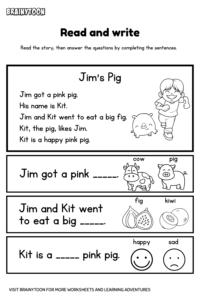
Exercises that focus on quickly and accurately recognizing words are especially helpful. This can include practicing high-frequency words that appear often in everyday texts.
For children who find traditional reading methods challenging, alternative approaches can make a meaningful difference.
These may include oral storytelling, listening to audiobooks, or watching stories with subtitles.
Visual supports such as picture books, comics, and interactive digital stories can make reading more accessible and less overwhelming.
Encouraging regular reading at home is also important. A consistent routine helps reinforce the value of reading and builds confidence over time.
The importance of individualized learning materials
No two children learn in exactly the same way, and this is particularly true when it comes to reading. Children with reading and writing difficulties often have unique needs that benefit from tailored support.
Individualized learning materials may include large-print books, audiobooks, and digital applications designed to address the child’s specific challenges and strengths.
Digital tools and apps
Technology has opened new opportunities for learning, especially for children with reading and writing difficulties. Many digital tools are designed to support literacy development in engaging and accessible ways.

For example, Brainytoon offers books with supportive features such as audio narration and animated text to guide children through the reading experience.
Multisensory methods
Multisensory approaches are particularly effective for children with reading and writing difficulties. These methods combine visual, auditory, and kinesthetic (movement-based) techniques to strengthen learning and memory.
Examples include tracing letter shapes on sandpaper or forming letters with clay, allowing children to learn through touch and movement as well as sight and sound.
Collaboration between home and school
Maintaining open communication between parents and teachers is essential. When parents, guardians, and educators work together, children receive consistent encouragement and support both in the classroom and at home.
Specially trained teachers and speech-language therapists can provide invaluable guidance and support. They can also recommend learning materials and teaching strategies that best meet each child’s individual needs.
Overcoming reading and writing difficulties can be challenging. With the right support, patience, and resources, however, every child can develop the skills and confidence needed to succeed.