Teacher-parent engagement strategies and communication tips
Strong communication between teachers and families helps children feel supported at school and at home. When parents understand what their child is learning and what is happening in the classroom, they can continue meaningful conversations and learning at home.
Effective family engagement does not require constant messages or long newsletters. Clear, consistent, and useful communication is often enough to build trust and strengthen the connection between school and home.
Use digital tools to stay organized
Digital tools cannot replace personal relationships, but they can make communication easier to manage.
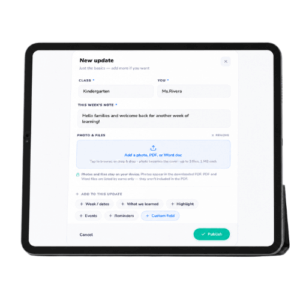
With Brainytoon Classroom Connect, teachers can publish classroom updates, share learning highlights, add events, send reminders, and keep files and resources in one place.
Updates can be shared digitally or saved as PDFs for printing or emailing. This reduces repeated work while giving families a clear place to find important information.
Communicate regularly and consistently
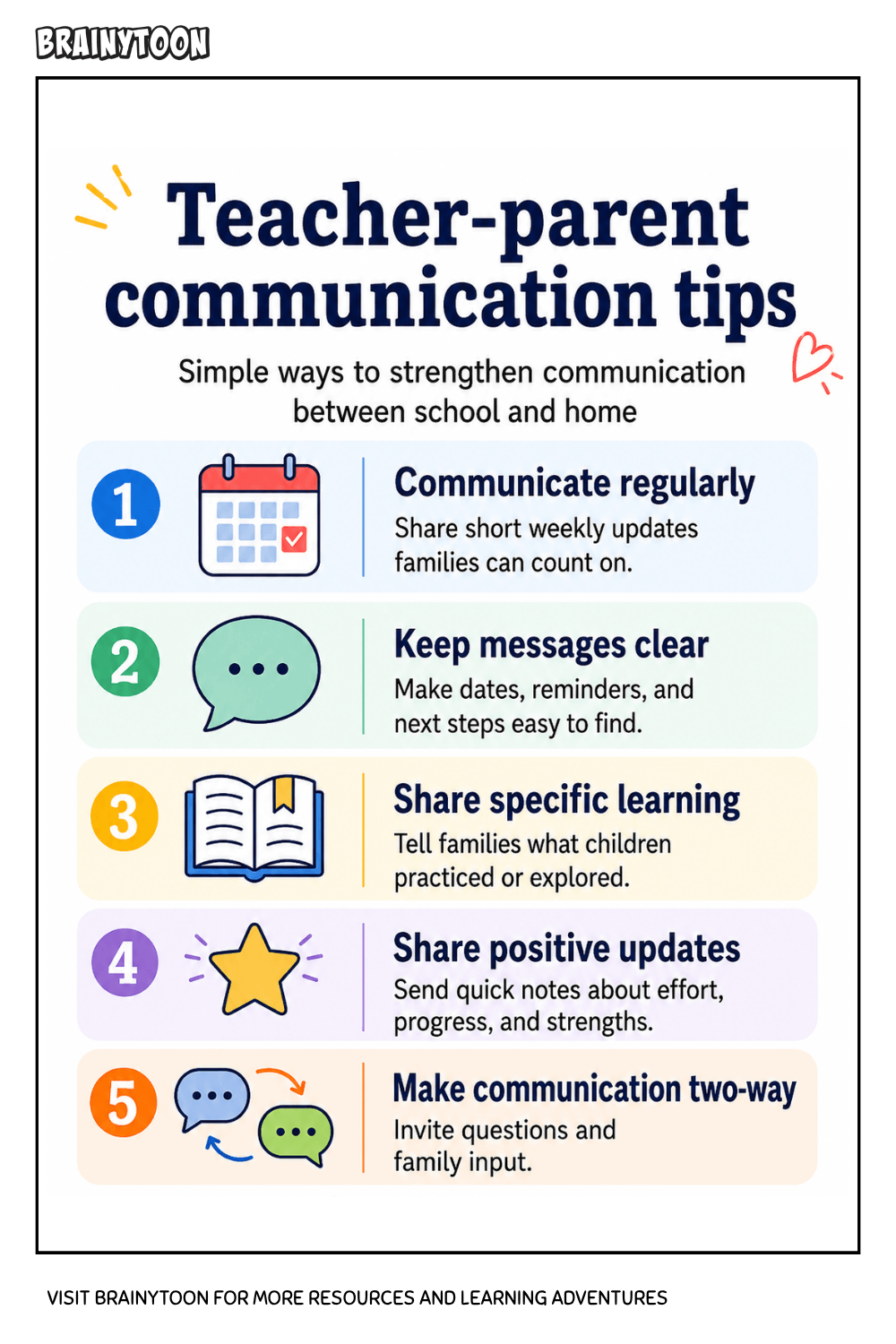
Families should know when and where they can expect classroom updates. A short weekly message is often more helpful than several scattered announcements sent through different channels.
A weekly update might include what the class has been learning, an important classroom moment, upcoming dates, and any reminders families need to know. Using the same format and communication channel each week helps parents quickly find important information.
Keep messages clear and easy to read
School communication should be simple, organized, and easy to scan. Important dates, deadlines, and actions should stand out.
Instead of writing one long paragraph, teachers can divide an update into short sections:
- This week: We practiced identifying shapes around the classroom.
- Coming up: The class will visit the library on Thursday.
- Please remember: Return permission forms by Tuesday.
This makes it easier for busy families to understand what happened and what they need to do next.
Share specific examples of learning
Messages such as “We had a great week” are positive, but they do not give families much to talk about at home.
Specific examples are more useful. A teacher might explain that the class practiced the letters B and D, created patterns with colors and shapes, or read a story about friendship.
These details give parents natural conversation starters and help them understand how children learn through play, discussion, movement, and hands-on activities.
Suggest simple ways to continue learning at home
Home activities should feel easy and playful, not like extra homework.
If the class is learning about shapes, families can look for circles and squares around the house. If children are practicing language skills, parents can read a short book, play with rhyming words, or ask their child to explain something they learned.
The best suggestions require little preparation and fit naturally into everyday routines.
Share positive updates
Teacher-parent communication should not happen only when there is a concern.
A brief message about a child helping a classmate, working hard on a puzzle, or joining a group discussion can help families feel more connected to the classroom.
Positive communication also builds trust, making it easier to have constructive conversations when challenges arise.
Make communication two-way
Family engagement works best when parents feel comfortable asking questions and sharing information.
Teachers can invite families to respond by asking whether their child has talked about a classroom topic at home or whether there is anything the school should know that week.
Parents often have valuable insight into their child’s interests, routines, strengths, and needs. Listening to families helps create a stronger partnership around the child.

Choose the right communication method
General updates, events, reminders, and shared resources can usually be sent through a classroom platform or weekly newsletter.
Sensitive topics, including individual learning needs, behavior concerns, health information, or personal family matters, should be discussed privately.
Families have different schedules, language needs, and levels of access to technology. Communication should be easy to understand and available in formats that work for as many families as possible.
Family engagement should not be measured only by attendance at school events. Reading updates, responding to messages, and continuing learning at home are also meaningful forms of participation.
Small changes can build stronger partnerships
Improving teacher-parent communication does not require a complicated new program.
A consistent weekly update, a positive message, a clear reminder, or a simple activity to try at home can make a meaningful difference.
When families feel informed, welcomed, and included, trust grows. Clear routines and practical tools also help teachers communicate effectively without creating unnecessary administrative work.