
How read-aloud time builds children’s vocabulary and reading skills
Reading aloud is about much more than simply telling a story—it’s a powerful way to build early reading skills, strengthen literacy, and expand children’s vocabulary.
When children listen to stories, they begin to understand how written language works. They learn sentence structure, grammar, and how ideas are organized on the page.
These early experiences are essential for developing strong reading skills.
Reading aloud also supports cognitive development by introducing new ideas and perspectives. At the same time, it helps children build empathy as they connect with characters and experiences in books.
Another key benefit is improved focus. Listening to stories helps children practice concentration and active listening—skills that directly support reading comprehension.
Brainytoon supports children’s literacy development by combining traditional read-aloud experiences with tools designed for early readers.
Why vocabulary matters for reading and literacy
Vocabulary is the foundation of reading. The more words a child knows and understands, the easier it is for them to recognize words in print and make sense of what they read.
A strong vocabulary supports reading fluency, comprehension, and writing skills—all of which are essential for long-term academic success.
Research shows a clear connection between early vocabulary development and later reading ability. Children who start school with a rich vocabulary often have a significant advantage when learning to read.
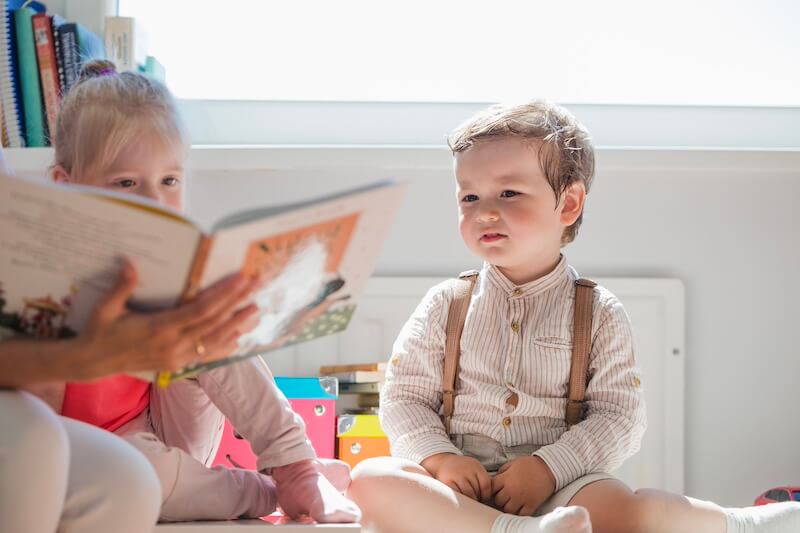
How read-aloud time supports reading development
Books—especially picture books and children’s stories—often use richer and more varied language than everyday speech.
When children listen to stories, they are exposed to new words they may not hear in daily conversation. Because these words are presented in context, children are more likely to understand and remember them—and later recognize them when reading on their own.
Many children’s books also use repetition, which helps children internalize language patterns and recognize familiar words. This strengthens early reading skills and builds confidence.
Picture books add another important layer by connecting words with images. This helps children link meaning to text, supporting both comprehension and word recognition.
As adults, we can also pause during reading to point to words, track text, and explain new vocabulary. This helps children understand that spoken words connect to written language—an essential step in learning to read.

Tips to make read-aloud time more engaging
To get the most out of reading aloud, try making it interactive and engaging. Here are some simple strategies for parents and educators:
- Read with expression: Use different voices for characters and adjust your tone to match the story. This brings the story to life.
- Talk about the story: Pause to ask questions about the plot, characters, or illustrations. This builds comprehension and critical thinking.
- Explain new words: Take a moment to define unfamiliar words and show how they can be used in other situations.
- Make real-life connections: Help children relate the story to their own experiences. This makes it more meaningful and easier to remember.
- Encourage predictions: Ask what they think will happen next. This strengthens understanding and engagement.
- Retell and summarize: After reading, invite children to retell the story in their own words. This reinforces comprehension and story structure.
- Follow their interests: Choose books that match the child’s interests and reading level to keep them motivated.

Adapting read-aloud time by age
Reading aloud can be adjusted based on a child’s age and development:
Infants and toddlers (0–3 years):
Choose books with large, colorful pictures and simple text. Rhymes and repetition help build early language and sound awareness.
Preschoolers (3–5 years):
Look for books with more developed stories and characters. Encourage children to repeat phrases and begin recognizing familiar words.
School-age children (6–12 years):
Introduce chapter books and explore deeper themes. Encourage children to read parts aloud themselves to build fluency and confidence.
The long-term benefits of reading aloud
- Perform better in school across all subjects
- Develop stronger reading comprehension and fluency
- Are more likely to become confident, independent readers
- Build stronger relationships with parents and caregivers
- Develop better focus, empathy, and emotional understanding
The benefits of regular read-aloud time go far beyond early language development. It plays a key role in building strong literacy skills.